
Adaptive Optics-enhanced multiphoton microscopy
AOscopy project : Context & problem
High-resolution, 3D fluorescence microscopy is key to support biology and medicine in the discovery of new therapies.
Due to these features, multiphoton microscopy is widely used in application fields such as neuroscience, immunology, oncology, dermatology, and developmental biology.
As a key tool, it enables a better understanding of both morphological and functional characteristics of biological systems, with a view on improved diagnosis and therapy of multiple diseases.
It provides:
Structural & functional visualization and quantification with specificity
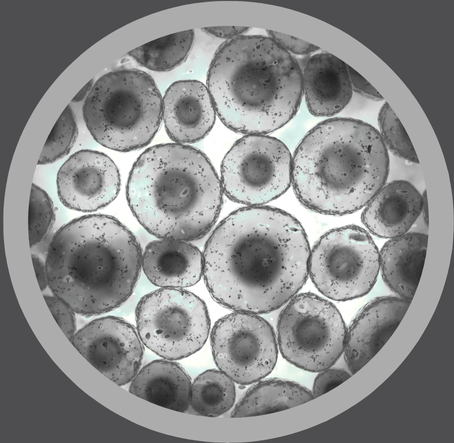
STRUCTURE
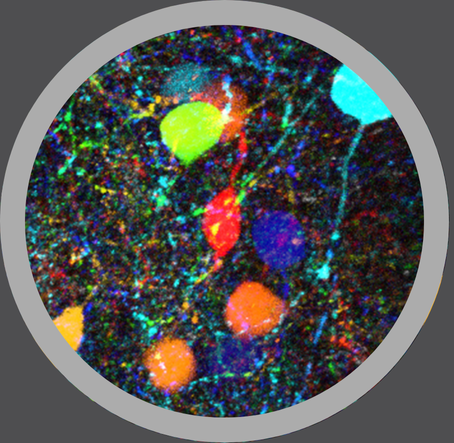
SEGMENTATION

ACTIVITY
In various biological models, at high-resolution, in 3D, in depth
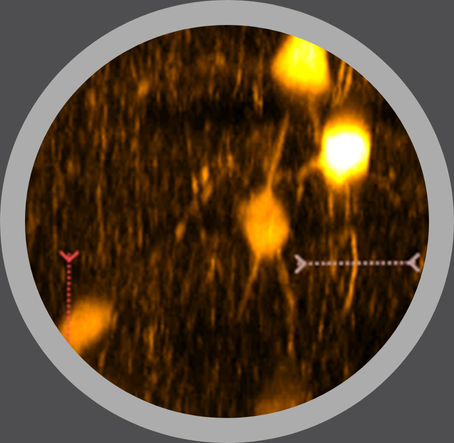
MOUSE

SPHEROIDS

ORGANOIDS
However, it is most often severely limited by the intrinsic optical inhomogeneity of biological media, which restricts both imaging depth and sensitivity.
Optical aberrations limits:
- achievable depth, resolution and contrast
- visualization & quantification capabilities
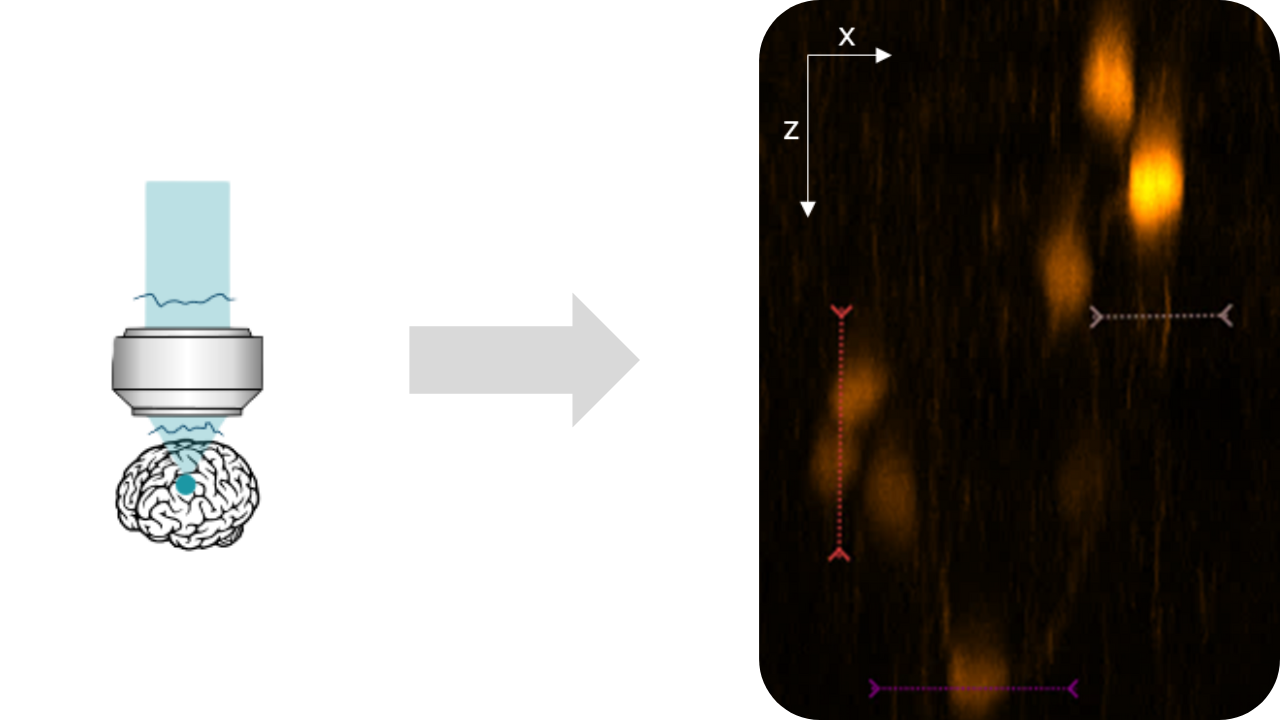
A solution to optical aberrations : Adaptive Optics (AO)
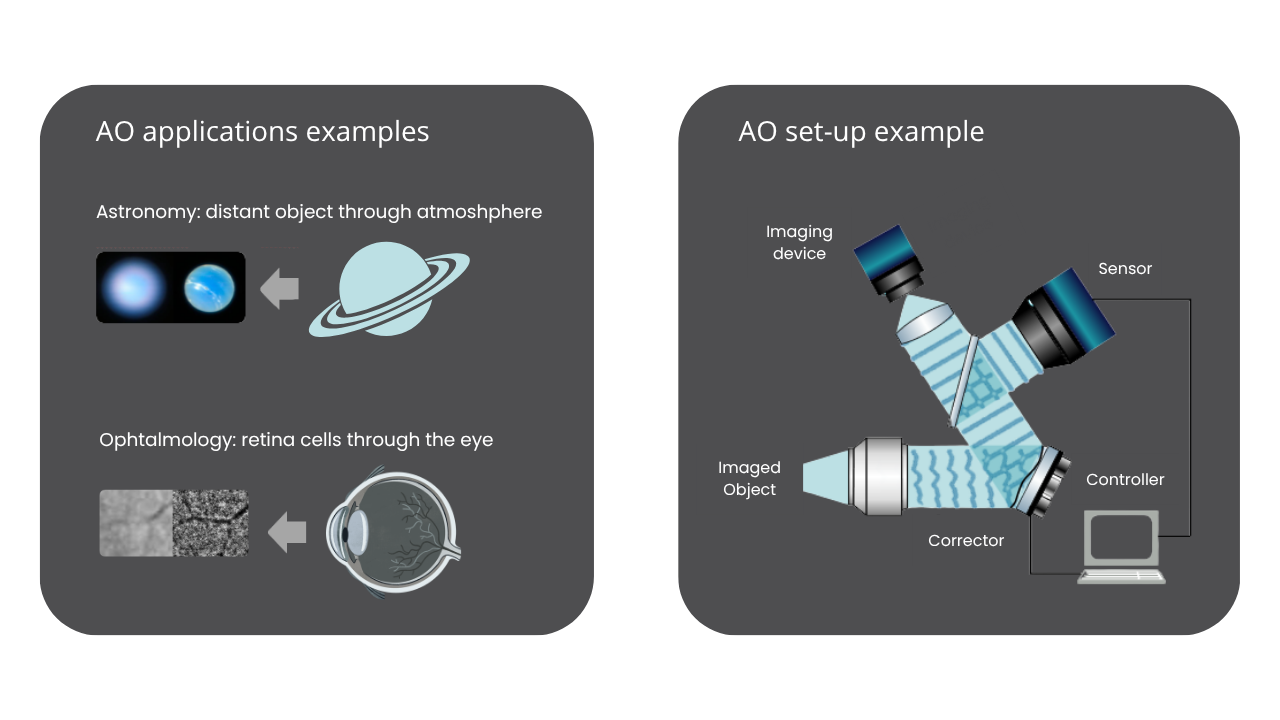
Adaptive optics, originally developed for astronomy and later applied in ophthalmology, corrects optical aberrations in real time. Applied to microscopy, AO has the potential to drastically enhance deep imaging performance.
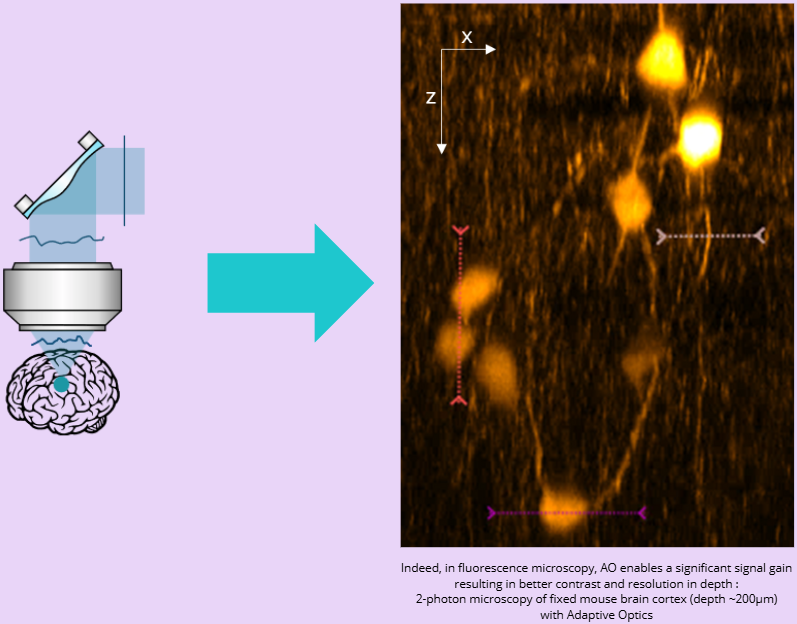
Indeed, in fluorescence microscopy, AO enables a significant signal gain resulting in better contrast and resolution in depth :
Until now, several barriers have prevented AO from being widely adopted in microscopy:
- Existing AO components are not optimized for microscopy,
- AO methods are slow, complex, and lack robustness,
- AO systems often require expert knowledge,
- Most microscopy companies do not specialize in AO.
A new-generation AO-based two-photon microscope
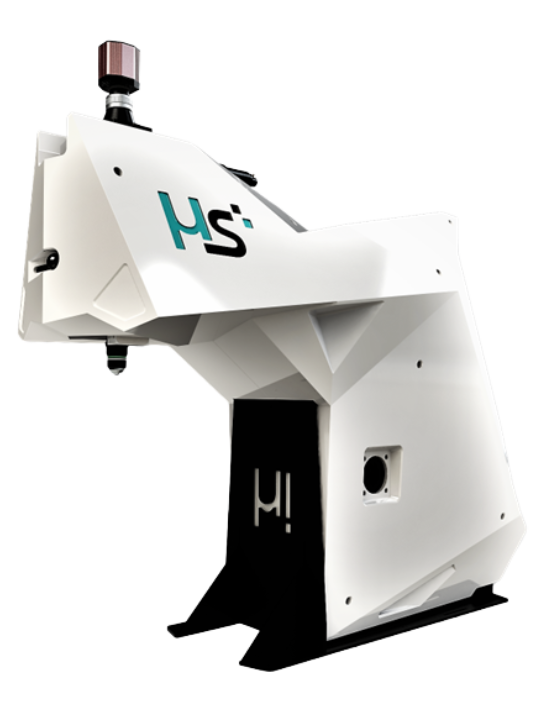
Considering the limitations listed previously, AOscopy aims to develop a prototype of AO-enabled two-photon microscope, integrating several innovations:
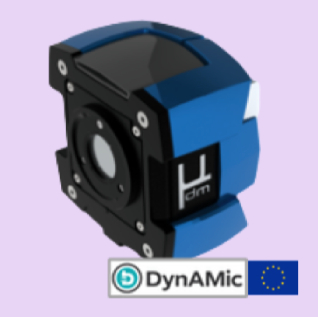
→ A new-generation deformable mirror, based on proprietary technology and specifically designed for microscopy
→ A wavefront sensing approach, tailored to microscopy, that enables :
- fast AO correction
- high accuracy without impacting imaging conditions

The unique characteristics of the envisioned product are to offer the only multiphoton microscope on the market that would :
- embed automated AO, with no user expertise nor action required
- enable fast aberration correction, compatible with 3D in-vivo imaging
- prove significant signal increase at large depths, thus reducing phototoxicity
- allow to systematically increase imaging depth
- improve data quantification and accuracy, due to strongly enhanced image contrast
The unique characteristics of the envisioned product are to offer the only multiphoton microscope on the market that would :
- embed automated AO, with no user expertise nor action required
- enable fast aberration correction, compatible with 3D in-vivo imaging
- prove significant signal increase at large depths, thus reducing phototoxicity
- allow to systematically increase imaging depth
- improve data quantification and accuracy, due to strongly enhanced image contrast
Overall, AOscopy objectives are, at technological, applicative and business levels :
- To developp and duplicate a prototype of an AO-two-photon microscope, enabling to maintain diffraction-limited imaging with strong signal enhancement at large depths in biological media.
- To perform market/applicative tests, using the developped prototypes, by representative end-users, in order to refine, quantify and validate the value offer in the intended environment. This would be done for several applicative use cases.
- To consolidate a buisness model and a buisness plan, targeting the exploitation and wide adoption of AO in microscopy.
Behind the project :
AOscopy is an EIC funded project led by Imagine Optic (IO), a pioneer French company specialising in wavefront sensing and adaptive optics. With over two decades of experience, IO has become a key player in advancing microscopy technologies and now operates a dedicated division for this field : mu-Imagine.
The company holds a strong portfolio of AO-related intelectual property (IP) and has the most extensive experience on the market in adapting AO to custom needs, delivering some of the first industrial AO systems for microscopy.